
The Bedroom as Sanctuary: Blackout, Layering and the Fabrics That Actually Help You Sleep
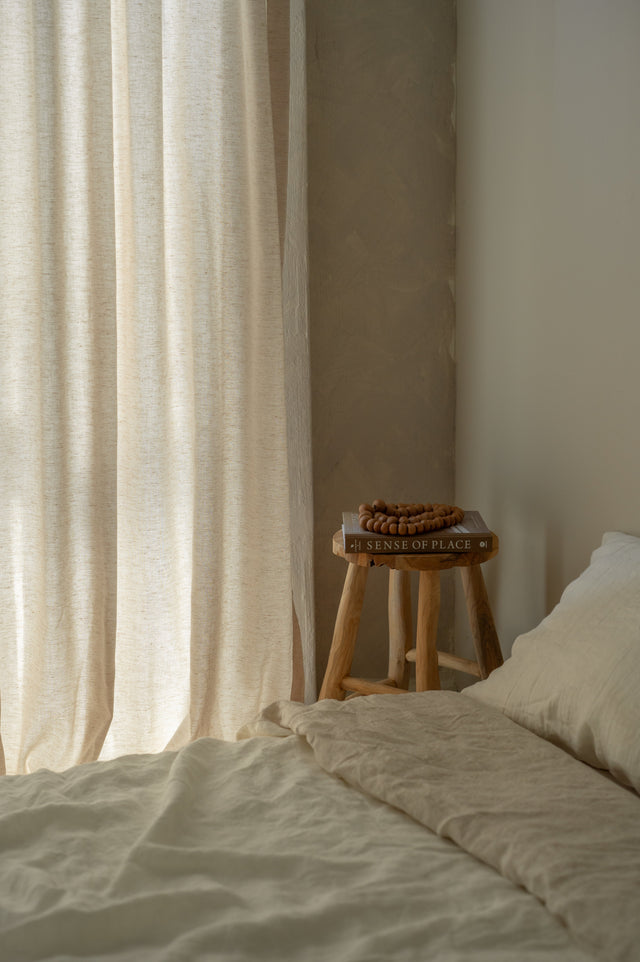
Blackout, layering and fabric weight are not decorative decisions in a bedroom. They are closer to physiological ones, and over time they decide how well the room lets you sleep.
Yet the bedroom often receives less thought than the rooms guests actually see. The living room gets the design attention and the considered fabric brief. The bedroom gets whatever curtain came with the fit-out, adjusted only when the light becomes impossible to ignore. Bedroom curtains carry more responsibility than that. They are doing physiological work while the rest of the room does nothing at all.
Over 35 years of craftsmanship and trusted heritage through parent company Artelier, our workshop treats bedroom fabrics as part of the sleep environment rather than a finishing touch, chosen for how the room performs after the lights go out. For a household where the bedroom is specified once and expected to hold for years, getting the fabric brief right the first time matters more here than almost anywhere else in the home.
Blackout, Properly Understood
Whether the room relies on blackout curtains or blackout blinds, the same principles decide whether it reads properly dark.
Fabric and Lining
Proper blackout comes from a triple-weave construction or a dedicated blackout lining sitting behind a decorative day fabric. A night curtain and a blackout curtain solve different problems. One softens light and privacy for the evening. The other removes light almost entirely for sleep. A single layer of heavy fabric rarely does both.
Track Integrity
Light leaks at the top and sides matter as much as the fabric itself. A ceiling-mounted track with side channels closes gaps that a wall-mounted rod cannot, which is often the difference between a room that reads dark and one that only looks dark. In a high-rise unit facing another block or a well-lit stretch of road, this detail decides whether four in the morning stays four in the morning.
Lining Colour
Darker linings absorb more light. Lighter ones bounce ambient street light back into the room. In a high-rise Singapore bedroom, where the city outside is rarely fully dark, this choice matters more than it appears to on a swatch card.
Everyday Maintenance in a Humid Climate
A single track can carry three settings across the day. Day and night curtains handle the transition from morning to evening, and a blackout layer takes over once the lights go off, giving the same room three distinct conditions without moving a single piece of furniture.
Layered night curtains also soften corridor noise and street sound, a real consideration in condo bedrooms where both a neighbour and the traffic below can reach through the wall. Motorised curtains make the transition between settings effortless, drawing the blackout layer at a set hour without a switch to find in the dark.
Weight matters as much as layering. Lined linen or a wool-blend backing holds its pleat and reads restful, where a thin single-layer curtain lifts with every draft from the air conditioning and never quite settles for the night.
The Fabrics Closest to Sleep
Fabric choice at the headboard affects how the room feels against skin during the transitions in and out of sleep. Linen breathes and softens with wear, velvet holds warmth and reads considerably more formal against a low bed frame, and wool keeps its shape through years of use without needing to be re-covered.
An upholstered bench at the foot of the bed or a reading chair by the window carries the fabric story from the headboard through to the linen blackout curtains at the window, keeping the room composed rather than assembled from separate decisions.
Breathable natural fibres such as linen, cotton and wool manage Singapore's humidity better than synthetic blends, which tend to trap heat against the body through the night.
A Bedroom That Rewards Rest

The bedroom performs at its best when blackout, layering and fabric are treated as one system rather than three separate purchases made at different points in the fit-out. Treated separately, each piece solves its own problem and leaves the others unresolved.
Our workshop specifies bedroom fabrics as part of the sleep environment, matching materials to how the room needs to behave after dark. If you are still weighing your choice of blinds for the bedroom windows, our guide to choosing the right blinds covers the comparison in more depth. The same thinking carries through to how we would approach a five-star hotel bedroom brought into a private residence.
Browse our night curtain and blackout collections to build the bedroom the way it deserves, or book a consultation at 276 River Valley Road to walk through fabric options with our team.