
How to Make Your House Look Like an Art Gallery With Soft Furnishings
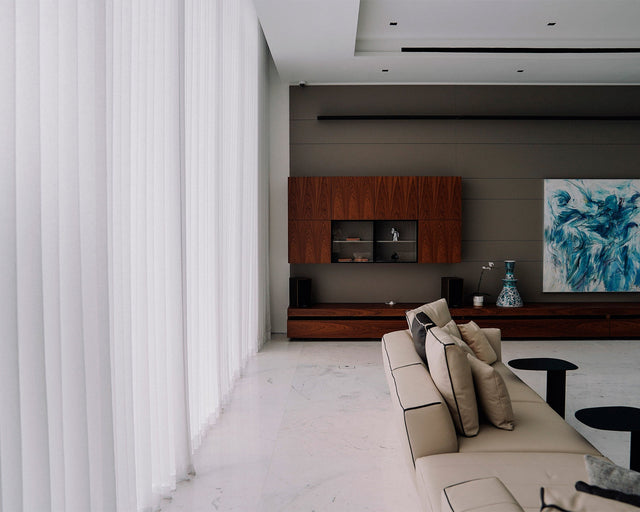
There is a quiet appeal to the art gallery. Not only for what it displays, but for how it holds attention. Walls are not filled, they are curated. Light is controlled to reveal detail rather than overwhelm it. Each element within the home is given room to exist on its own terms, without competition. The result is an environment where beauty is not incidental, but deliberately framed.
For the modern homeowner, this interior design philosophy holds a particular attraction. It reflects a particular sensibility and desire to live with the same level of intention. To surround oneself not with excess, but with considered pieces that have been chosen for how they contribute to the whole.
Achieving this is not a matter of imitation. It requires a similar discipline to that found in gallery spaces. Objects are not placed at random, and surfaces are not treated as neutral backdrops. Instead, everything from light to material is accounted for, shaping how each element is perceived within the room.
Soft Furnishings as Part of the Spatial Framework
Soft furnishings are often mistaken for decorative layers. In reality, they are part of the spatial framework that determines how a room is experienced. In an art-led interior, they are not secondary additions. They are the conditions that allow the space to work.
A rug, for example, does more than define an area. It absorbs the acoustics of a room, reducing hardness in sound and grounding conversation within the space. Curtains are not simply window coverings. They regulate light. Even wall finishes play a role, shifting subtly under changing light so that colour is never static, but responsive.
Mastering Light with Bespoke Sheers
Light is the most defining element in any art gallery interior design setting. It determines how surfaces are read, how colour is perceived, and how attention moves through a space. In many houses, however, it is also the least precisely controlled.
Control the Glow with High-Performance Sheers
Sheer curtains in finely woven linen, such as Aratemete’s Lino range, soften direct sunlight without losing clarity in the room. Instead of harsh contrast, light is filtered into a more even distribution that settles across walls and furniture pieces.
Extending Vertical Scale Through Curtain Placement
In many homes, curtain tracks are positioned just above the window frame, following the outline of the opening rather than the architecture. Raising this line to the ceiling changes the perception of scale immediately. The curtain becomes part of the wall rather than an accessory to the window, extending the sense of height across the room.
An S-Fold curtain heading reinforces this effect through uninterrupted fabric movement from ceiling to floor. The result is not decorative emphasis, but a clearer reading of height and proportion. The room feels more resolved, with a stronger sense of spatial continuity created purely through fabric and placement.
This shift in vertical scale is what creates the same sense of grandeur often experienced in a renowned art gallery like the Tate Modern. The eye is drawn upward, the space feels larger than its physical footprint, and the home takes on a quiet sense of scale that defines how it is experienced.
Anchoring the Space with Hand-Knotted Rugs

A rug rarely draws immediate attention, but it plays a defining role in how a space is grounded. It sets the visual weight of the room and determines how furniture sits within the broader composition.
Prioritise Texture Over Pattern
Pattern introduces visual interruption. It asks for attention. Texture, by contrast, recedes into the background while still shaping how the room is perceived.
The Lines collection in New Zealand wool and TENCEL introduces a subtle directional weave that brings structure to the floor without visual noise. The Kaizen rug, woven in 100% TENCEL, responds softly to changing light, shifting in tone as the day progresses.
These variations remain restrained, but they add depth in a way that supports the overall room rather than disrupting it, maintaining the same sense of visual clarity seen in curated gallery interiors.
Precise Proportions for a Considered Layout
Rug sizing has a direct impact on how a space holds together. Smaller placements that sit within the furniture footprint often fragment the room visually, leaving individual pieces feeling disconnected.
In larger homes such as penthouses or Good Class Bungalows, where space is defined by openness rather than walls, this sense of grounding becomes even more important in achieving the calm, gallery-like quality.
In these contexts, custom rug sizing allows the rug to be tailored precisely to the proportions of the layout, ensuring it aligns with the scale of the room rather than standard showroom dimensions.
What Defines a Gallery-Grade Surface for Your Home
Hospitality-grade specification is the baseline. A surface should feel considered from the outset and be made to endure, both in appearance and performance, over time.
- The Material: Honest fibres such as Belgian linen, organic cotton, New Zealand wool, alpaca wool, and TENCEL form the foundation. These materials are chosen not only for their texture, but for how they evolve within a space, settling in rather than dating out.
- The Palette: Saturated neutrals such as limestone, bone, slate, and off-white provide a quiet backdrop that holds presence without dominance.
- The Hardware: Concealed tracks and motorised systems ensure movement remains unobtrusive, particularly in larger spaces where manual operation becomes impractical.
- The Finish: Hand-knotted construction defines pieces intended for longevity. The Abbey Lane rug in 100% alpaca wool sits within this category, designed for homes where surfaces are expected to age with the space rather than be replaced by it.
Creating a Space That Feels Complete
A home does not achieve an art gallery-like quality through accumulation. It comes from restraint and clarity in how each element is resolved within the space. The interior design ideas and principles involved are timeless. Light is softened rather than left to dominate. Floors provide grounding without visual interruption. Walls support colour quietly, allowing the room to feel cohesive rather than fragmented.
What emerges is a sense of balance, where the space no longer feels in transition, but fully formed in its composition.
Explore Aratemete’s collection of rugs and curtains to shape interiors with greater clarity and intention. Or contact us for an appointment to visit our showroom on River Valley Road to experience the materials firsthand before specifying them for your home.